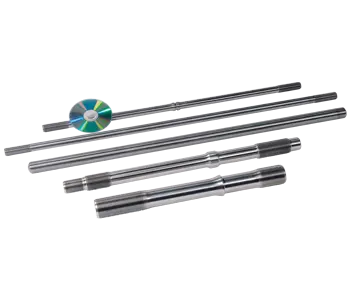
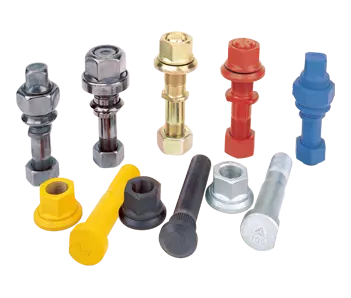
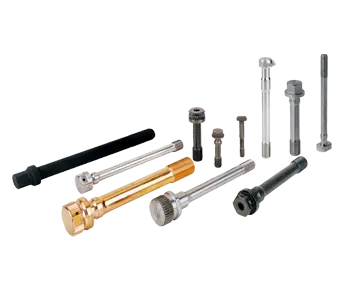
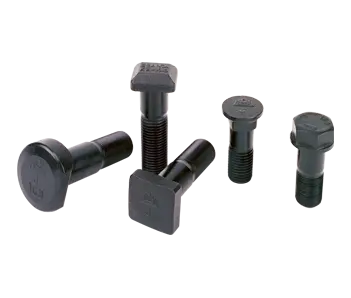
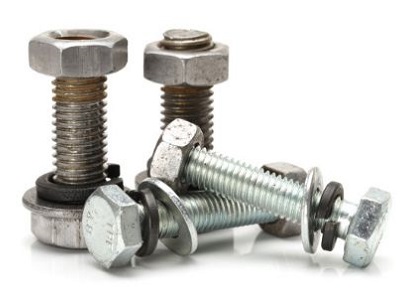
In industrial equipment assembly and connection, a stud plays a crucial role as an essential fastening component. A double end stud is a uniquely designed stud, characterized by having threads at both ends, with a smooth, unthreaded section in the middle. This design offers greater flexibility, allowing the stud to be used with either both ends threaded in the same direction or in opposite directions. The size and length of the stud can also vary, providing different options for different applications.
Additionally, a double end stud is commonly known by other names such as a double end bolt or double end screw. Typically, larger versions are referred to as double end bolts, while the smaller ones are often called double end screws.
Where Is a Double End Stud Used?
Due to its unique design, a double end stud is widely used in specific situations. It is usually longer than bolts with heads, making it particularly useful when connecting thicker materials. It is commonly found in scenarios where traditional bolts cannot be used, such as thick plates, concrete trusses, roof beams, or suspended monorail components.
A double end stud is also invaluable in environments with high pressure, temperature fluctuations, and extreme temperature conditions. It is frequently used in industries such as automotive, mining machinery, boiler operations, motorcycles, suspension towers, large-span steel structures, and large buildings, particularly in situations where frequent disassembly of large equipment is necessary.
Why Should a Double End Stud Be Maintained?
As part of the equipment's connection, a double end stud often bears significant pressure and vibrations from heavy machinery. Over time, factors such as external loads, vibrations, and temperature fluctuations can reduce the friction force, causing the threaded connection to loosen and eventually fail. Therefore, maintaining a double end stud is crucial for ensuring the stability and safety of the equipment.
The maintenance process primarily involves regular inspection and servicing of the equipment. During each maintenance session, a double end stud and other components should be thoroughly checked. This includes inspecting the stud head and guide parts for damage, looking for cracks or indentations in the threads, examining any changes in thread shape, and ensuring the pitch is consistent. If any issues are found, the stud should be replaced promptly to ensure the equipment continues to operate smoothly.
Through proper maintenance, a double end stud can function more effectively, extending its lifespan and enhancing the safety and reliability of the equipment. In large-scale machinery operations, the reliability of the double end stud directly impacts the overall system's performance, making maintenance essential.
Selection and Application of a Double End Stud
When choosing a double end stud, it is essential to consider the specific requirements of the application. The length must be suitable for the equipment being connected, and the type and size of the threads should be chosen carefully based on the working environment. For scenarios where thicker equipment needs to be connected, the double end stud's length must be adequate to meet the connection demands.
In practice, a double end stud is widely used in high-pressure, temperature-variable environments, especially where disassembly is frequent, such as in large buildings and mining machinery. Its secure connection and easy disassembly properties make it an indispensable fastener in industrial applications.
By gaining a deeper understanding of a double end stud, we can appreciate both its unique design features and its broad range of applications. Proper selection and maintenance of a double end stud are crucial for the safe operation of equipment. As industrial developments progress, a double end stud will continue to play an essential role in connecting large-scale equipment, driving the advancement of the industry.



 中文
中文 English
 日本語
日本語 한국어
한국어 français
 Deutsch
 Español
 italiano
 русский
 português
 العربية
 Türkçe
 ไทย
ไทย