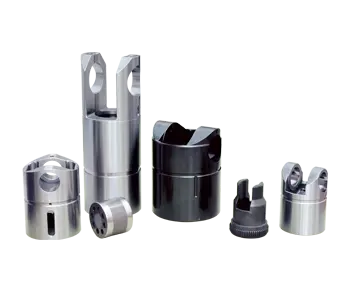
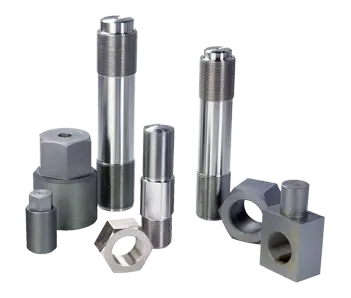
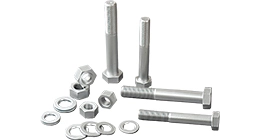
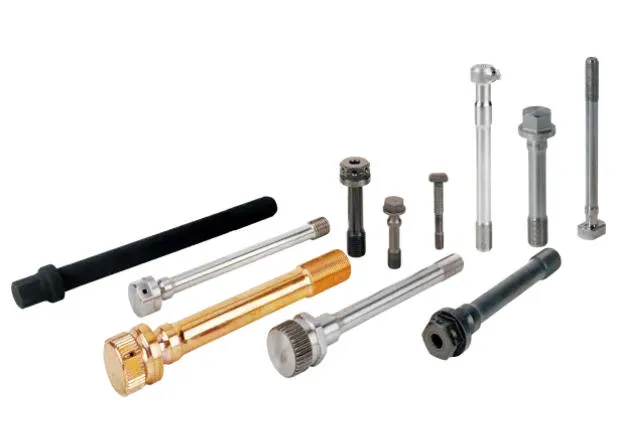
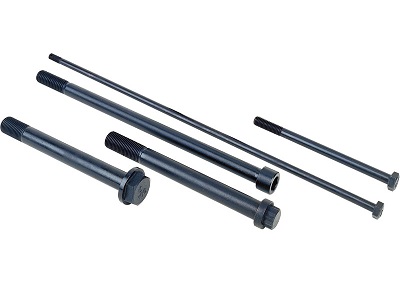
Atmospheric corrosion is one of the main types of corrosion damage to a fastener bolt, with the primary corrosion products being iron hydroxides, oxides, and other minor iron compounds. Common surface treatment processes involve the application of protective coatings, which work through methods like barrier protection, inhibiting the diffusion of corrosive media, and electrochemical protection to delay corrosion.
Traditional surface treatments provide protective, decorative, and functional coatings for various fastener bolt products, playing an irreplaceable role in many industries of the national economy. Surface treatment technology can endow a fastener bolt with the following functions, either locally or across its entire surface:
Enhanced wear resistance, corrosion resistance, fatigue resistance, oxidation resistance, and radiation protection.
Improved surface lubricity.
Self-healing surface properties.
Improved thermal conductivity.
Enhanced electrical conductivity or insulation.
Increased adhesion properties.
Electroplating
Electroplating involves immersing a metal fastener bolt in a solution containing metal compounds to be deposited. An electric current is passed through the electrolyte, causing the metal to be deposited onto the fastener bolt. Electroplating methods include zinc plating, copper plating, and various alloys. Electroplating serves to add a metal layer to a fastener bolt, which can change the bolt's dimensions, increase hardness, prevent wear, improve conductivity, lubrication, heat resistance, and surface aesthetics. Zinc electroplating is the most widely used plating method due to its cost-effectiveness and aesthetic appeal. However, it has relatively poor surface properties and unstable performance.
Electrophoresis
In electrophoresis, a coating is placed between the positive and negative electrodes, with charged ions moving toward the cathode, forming an insoluble film on the surface of the fastener bolt. This film is uniform and smooth, with excellent properties such as hardness, corrosion resistance, and permeability. Electrophoresis is commonly chosen for surface treatments of automotive fastener bolt that require high performance.
Phosphating
Phosphating is a process where chemical and electrochemical reactions form a phosphate conversion coating on a fastener bolt. This phosphating film provides a degree of surface protection and can also serve as a lubricant in threaded connections.
Passivation
Passivation involves the formation of a thin, stable oxide layer on the surface of the metal through reaction with oxygen molecules. This layer effectively isolates the metal from corrosive media, thus preventing corrosion. Passivation increases the lifespan of a metal fastener bolt and significantly reduces economic costs.
Zinc Diffusion

Zinc diffusion treatment is a chemical surface process in which a metal fastener bolt is heated in an appropriate medium, allowing zinc to diffuse into the surface, changing its chemical composition and microstructure to enhance corrosion resistance. A fastener bolt treated with hot-dip zinc diffusion not only gains corrosion resistance but also exhibits improved hardness and wear resistance. However, this process may have environmental impacts.
Dacromet Coating
The "Dacromet" process involves neutral cleaning agents for degreasing, shot blasting for surface oxidation, multi-alloy co-diffusion, cooling, shot blasting, passivation, and immersion or spraying with Dacromet solution. The fastener is then sintered and cured at around 300°C. This process is an environmentally friendly alternative to traditional electroplated zinc and hot-dip zinc, which are highly polluting. Dacromet can be applied to steel, iron, aluminum, and their alloys, as well as structural fastener bolt. This method improves product quality, protects the environment, and offers excellent corrosion resistance, with the treated fastener bolt remaining rust-free for long periods. However, Dacromet coating is relatively expensive compared to other corrosion protection methods.


 中文
中文 English
 日本語
日本語 한국어
한국어 français
 Deutsch
 Español
 italiano
 русский
 português
 العربية
 Türkçe
 ไทย
ไทย