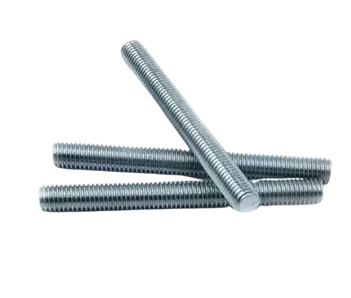
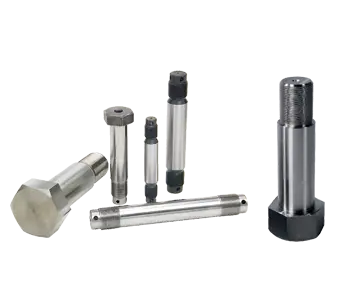
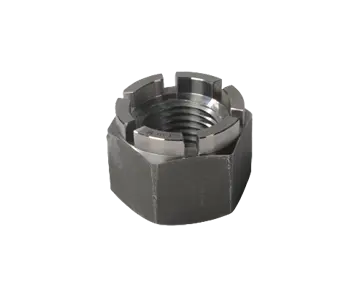
In the selection of bridge component connections, welding and bolt are two common and widely discussed methods. This decision involves multiple factors, and to make an informed choice, each project's specific requirements and characteristics need to be carefully considered.
Historically, bridges and other steel structures used riveting, such as in the construction of the Golden Gate Bridge. This complex process involved heat treatment and forging of rivets, followed by a cooling process (known as annealing) to strengthen them. However, rivets alone were not very strong, and a large number of rivets had to be used to ensure the overall safety of the structure. Although this method was once prevalent, riveting is no longer used in modern bridge construction due to its complexity.
Despite this, bridges built with rivets still require maintenance, and bolt often serves as an ideal replacement for damaged rivets, particularly high-strength bolt designed to mimic the properties of rivets. Due to the aging of bridge materials, welding is not a viable option for maintaining old bridge connections, as it could potentially compromise the safety of the structure.

Apart from national technological preferences, the type of bridge also plays a key role in determining whether welding or bolt is used. For large bridges, hollow box-section designs are often chosen due to their excellent torsional stress absorption capabilities, and corrosion protection is typically only needed on the exterior. However, a drawback of the hollow box-section design is that it can only be connected from one side, making the use of bolt difficult. In contrast, welding proves to be more practical in this scenario. Bolt is more commonly used in smaller truss bridges, which feature interlocking triangular sections. Furthermore, bolt is prevalent in temporary bridges due to its ease of disassembly, cost-effectiveness, and efficiency.
When choosing between welding and bolt, efficiency and ease of use are critical factors. Welding usually requires certified welders and advanced tools, and due to the high temperatures involved, there are inherent risks. Therefore, performing welding tasks in a prepared factory setting is generally quicker and more convenient. However, when working on-site, bolt proves to be more convenient and effective. Bolt offers a more controllable operation that does not introduce unnecessary risks into the construction environment. Components are also easier to transport and install. Unlike welding, bolt has the added advantage of being non-permanent, allowing quicker, easier, and more cost-effective solutions in case of unexpected issues.
Considering the bridge type, national technological standards, and specific project requirements, the choice between welding and bolt is as controversial as choosing between concrete and steel. Therefore, rational and comprehensive thinking in bridge construction is key to ensuring the safety and efficiency of connections.


 中文
中文 English
 日本語
日本語 한국어
한국어 français
 Deutsch
 Español
 italiano
 русский
 português
 العربية
 Türkçe
 ไทย
ไทย