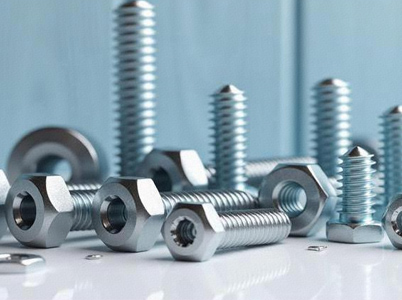
Standard fasteners available on the market are primarily made from four types of materials: Carbon Steel, Stainless Steel, Brass, and Aluminum Alloy.
1. Carbon Steel Carbon steel is categorized based on its carbon content into: Low Carbon Steel, Medium Carbon Steel, High Carbon Steel, and Alloy Steel.
1. Low Carbon Steel: C ≤ 0.25%. Domestically (in China) often referred to as A3 steel. Mainly used for Grade 4.8 bolts, Grade 4 nuts, small screws, and other products with no hardness requirements.
2. Medium Carbon Steel: 0.25% < C ≤ 0.60%. Domestically often referred to as 35#, 45# steel. Mainly used for Grade 8 nuts and Grade 8.8 bolts.
3. High Carbon Steel: C > 0.60%. Rarely used in the current market.
2. Stainless Steel Mainly Austenitic stainless steel (18% Cr, 8% Ni). Advantages: Good heat resistance, good corrosion resistance, good weldability.
3. Copper
Common materials are Brass (copper-zinc alloy).
4. Alloy Steel Often narrowly refers to Chromium-Molybdenum alloy steel.
II. Material Selection for Common Fasteners
1. Bolts, Studs, Screws:
Grades 3.6, 4.6, 4.8, 5.6, 5.8, 6.8: Generally use carbon steel, without heat treatment.
Grades 8.8, 9.8: Generally use low-carbon alloy steel or medium carbon steel, quenched and tempered.
Grade 10.9: Generally use low/medium carbon alloy steel or alloy steel, quenched and tempered.
Grade 12.9: Generally use alloy steel, quenched and tempered.
2. Nuts:
Grades 4, 5, 6: Generally use carbon steel, no heat treatment required.
Grades 8, 9: Generally use medium carbon steel, quenched and tempered.
Grades 10, 12: Alloying elements are often added to improve mechanical properties, quenched and tempered.
III. Effect of Alloying Elements
1. Carbon (C): Increases strength, especially response to heat treatment (hardenability). However, increasing carbon content reduces ductility and toughness, adversely affecting cold heading capability and weldability.
2. Manganese (Mn): Increases strength and, to some extent, hardenability (increasing the depth of hardening during quenching). Also improves surface quality. However, excessive manganese is detrimental to ductility and weldability, and can affect plating control during electroplating.
4. Chromium (Cr): Improves hardenability, wear resistance, and corrosion resistance. Also contributes to strength retention at elevated temperatures.
5. Molybdenum (Mo): Helps control hardenability, reduces the steel's susceptibility to temper embrittlement, and significantly improves tensile strength at high temperatures.
6. Boron (B): Significantly improves hardenability, particularly in low-carbon steels, making them respond better to heat treatment.
8. Silicon (Si): Contributes to strength. Appropriate content can improve ductility and toughness.
9. Sulfur (S): Improves machinability but causes hot shortness (embrittlement at high temperatures), degrading steel quality. Increased S content adversely affects weldability.
10. Phosphorus (P): Provides effective solid solution strengthening and cold work hardening. Used in combination with copper, it improves the atmospheric corrosion resistance of high-strength low-alloy (HSLA) steels. However, it reduces impact toughness. Used with S and Mn, it improves machinability but increases susceptibility to temper embrittlement and cold shortness.



 中文
中文 English
 日本語
日本語 한국어
한국어 français
 Deutsch
 Español
 italiano
 русский
 português
 العربية
 Türkçe
 ไทย
ไทย