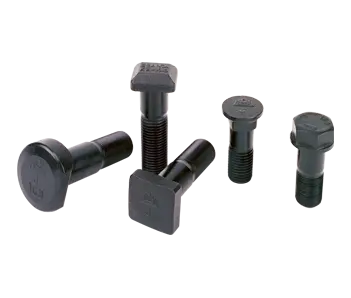
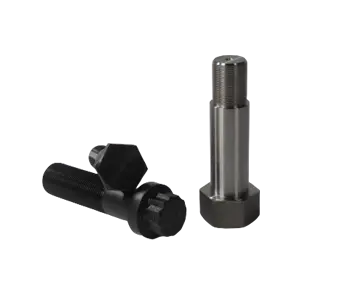
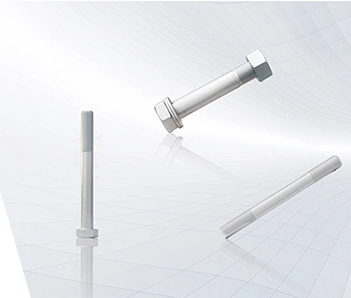
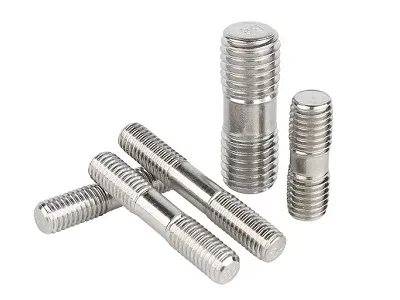
1. Small-Specification Bolts Below Class 8.8 (M16 and Below)
Raw Material Selection: Low-carbon steel
Blank Forming Method: Cold heading
Thread Forming: Thread rolling or thread chasing (criteria for selecting thread rolling or thread chasing)
Processing Route:
Raw material (material selection) → Material modification → Cold heading → Machining (chamfering, end facing) → Thread rolling or thread chasing → Surface treatment (as required) → Final inspection → Packaging
2. Large-Specification Bolts of Class 12.9 (M16 and Above)
Raw Material Selection: Medium-carbon alloy steel (35CrMo, 42CrMo, SCM435, etc.)
Blank Forming Method: Hot heading
Thread Forming: Thread rolling
Processing Route:
Raw material (material selection) → Material modification → Cutting → Machining (turning of thread blank) → Hot heading → Machining (turning of head, chamfering, end facing, overall length sizing, etc.) → (Marking) → (Shot blasting) → Grinding (grinding of thread blank) → Thread rolling → Dephosphatizing → Heat treatment → Flaw detection → Surface treatment → Final inspection → Packaging
3. Nut Processing Route
Nuts Formed by Hot Heading (Large Specifications)
Material Selection (according to nut property requirements)
Processing Route:
Material modification → Cutting → Hot heading → Machining (mainly for machining thread bottom hole, end facing to ensure height) → (Marking) → Tapping → (Heat treatment) → Surface treatment → Final inspection → Packaging
Alternatively:
Material modification → Cutting → Hot heading → Machining (mainly for machining thread bottom hole, end facing to ensure height) → (Marking) → (Heat treatment) → Tapping → Surface treatment → Final inspection → Packaging
Whether heat treatment is required for the nut shall be determined according to the required mechanical properties of the nut.



 中文
中文 English
 日本語
日本語 한국어
한국어 français
 Deutsch
 Español
 italiano
 русский
 português
 العربية
 Türkçe
 ไทย
ไทย